
evolution
Steinbearbeitung als ein Ausgangspunkt der kulturellen Evolution
The first part of this study deals with the formation of the first stone artifacts in the Palaeolithic period, beginning a good 3.3 million years ago. In addition, suspected links to brain development and the development of language in this early period are shown. The range of forms of the various artifacts is briefly mentioned, their presumed… read more

Steinbearbeitung als ein Ausgangspunkt der kulturellen Evolution
The first part of this study deals with the formation of the first stone artifacts in the Palaeolithic period, beginning a good 3.3 million years ago. In addition, suspected links to brain development and the development of language in this early period are shown. The range of forms of the various artifacts is briefly mentioned, their presumed… read more
Meditationen an Zweiseitern
The biface (handaxe) speaks directly to our artistic sensibilities. Their beauty is now also being noticed in paleoanthropological research. Nevertheless, these artifacts, which were carved over a period of approximately 2 million years, are often interpreted exclusively as tools or de-
vices, in keeping with the technomorphic attitude of… read more

Meditationen an Zweiseitern
The biface (handaxe) speaks directly to our artistic sensibilities. Their beauty is now also being noticed in paleoanthropological research. Nevertheless, these artifacts, which were carved over a period of approximately 2 million years, are often interpreted exclusively as tools or de-
vices, in keeping with the technomorphic attitude of… read more
Zur Evolution des menschlichen Kopfes
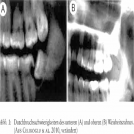
In the evolution of the human head a Shift in complexity takes place. Complexity is predorninately reduced in the jaw region (distally), in which the organism comes into direct contact with the environment through nutrition. Proxirnally, in the brain, besides the degradation processes present, complexity is predominately increased. The… read more
Zur Evolution des menschlichen Kopfes
In the evolution of the human head a Shift in complexity takes place. Complexity is predorninately reduced in the jaw region (distally), in which the organism comes into direct contact with the environment through nutrition. Proxirnally, in the brain, besides the degradation processes present, complexity is predominately increased. The… read more
Die evolutionäre Bedeutung des Spiels
The evolutionary significance of play
Human and animal play is both a fascinating and puzzling phenomenon. Its origin and function cannot be conclusively explained within conventional evolutionary theory. However, nowadays there exist extensive accounts and scientific descriptions that can provide us with a wealth of well documented… read more

Die evolutionäre Bedeutung des Spiels
The evolutionary significance of play
Human and animal play is both a fascinating and puzzling phenomenon. Its origin and function cannot be conclusively explained within conventional evolutionary theory. However, nowadays there exist extensive accounts and scientific descriptions that can provide us with a wealth of well documented… read more
Von der Symbiose zum sogenannten Brutparasitismus
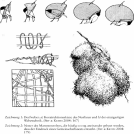
The three bird families, weavers, viduids (whydahs/indigobirds) and estrildids (waxbills), which today are classified separately, during the last century were regarded, often taxonomically variably, as one big family with corresponding sub-families. They probably once belonged to one family. In the weaver-bird group there is a genus whose males… read more
Von der Symbiose zum sogenannten Brutparasitismus
The three bird families, weavers, viduids (whydahs/indigobirds) and estrildids (waxbills), which today are classified separately, during the last century were regarded, often taxonomically variably, as one big family with corresponding sub-families. They probably once belonged to one family. In the weaver-bird group there is a genus whose males… read more